How Are Solar Panels Recycled? Complete Step-by-Step Process (2026 Guide)

Every day, thousands of solar panels reach the end of their operational life across the United States. What happens to these panels determines whether solar energy maintains its environmental promise, or creates the next wave of technological waste.
As solar energy deployment accelerates---with over 240 gigawatts of generating capacity now installed in the US alone---the solar panel recycling process has evolved from basic disposal to sophisticated material recovery. At OnePlanet Solar Recycling, we operate the Southeast's first and only R2v3 Appendix G certified facility, employing purpose-built technology that recovers up to 99% of panel materials for reintroduction into domestic supply chains.
This guide explains exactly how advanced solar panel recycling works---and why the process you choose matters for both environmental sustainability and economic value recovery.
Deconstructing Solar Panel Composition: Understanding Solar Panel Waste
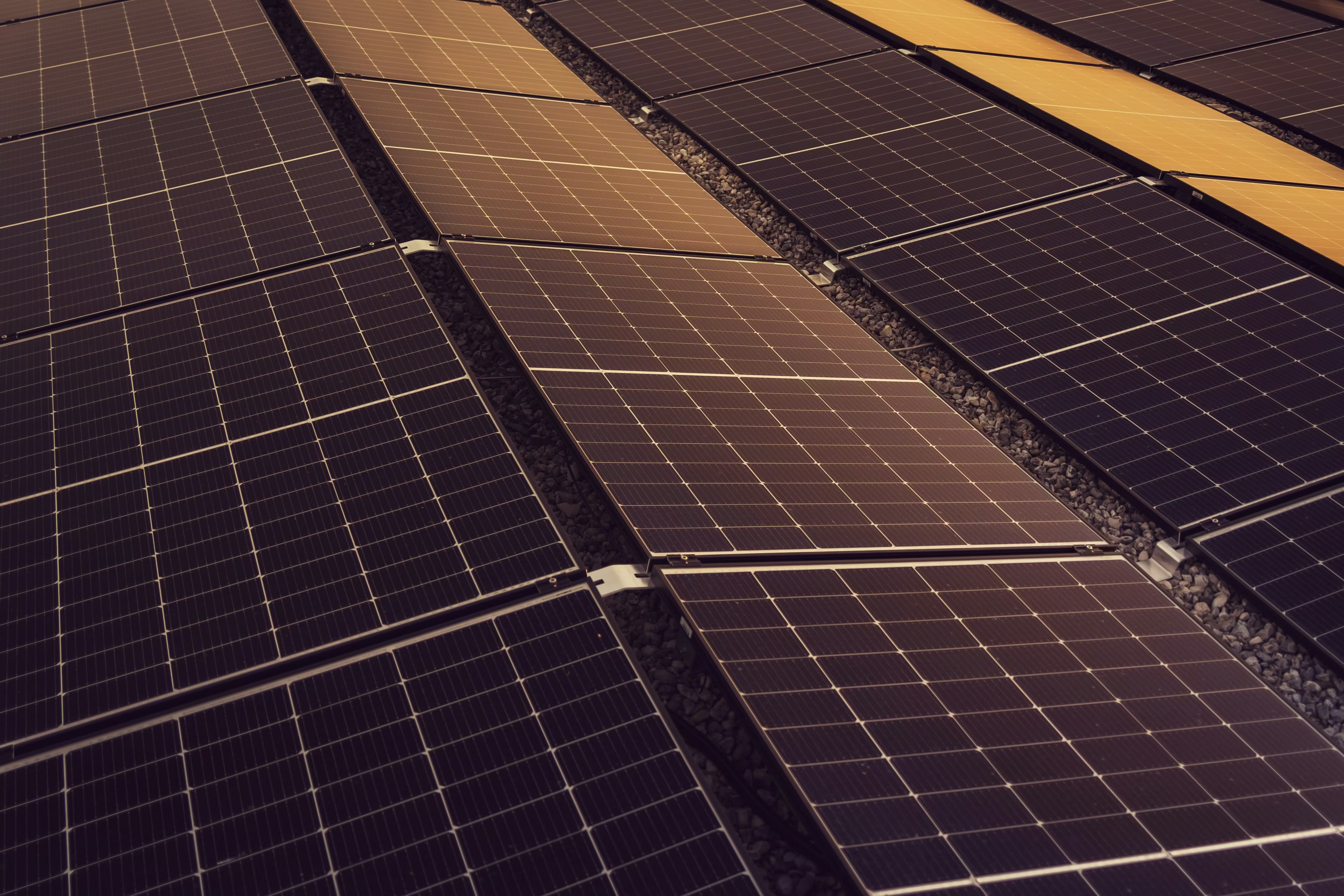
Before exploring recycling methods, it's important to understand what makes up a typical crystalline silicon photovoltaic module. These panels consist of several distinct material streams:
- Tempered glass (approximately 70-75% by weight)
- Aluminum frames (approximately 9-18%)
- Silicon wafers containing valuable semiconductor material
- Copper ribbons and busbars
- Silver contacts---a critical material with established commodity markets
- Polymeric (plastic) encapsulants including EVA
- Polymeric (plastic) backsheets (note that the backsheet may also be glass in bifacial modules)
While each component requires specialized processing to maximize recovery rates and material purity, the economic value locked in these materials is substantial. When multiplied across millions of panels, the recovered material value represents a significant opportunity for domestic supply chain development and reduced reliance on imported raw materials.
The Complete Solar Panel Recycling Process
We will delve into the different methods of recycling solar panels (mechanical, chemical, thermal) in a future post---below we have described a generic process that describes a common approach used today to recycle panels.
Important Note: The advanced process described below represents leading-edge industrial recycling---not the basic methods many recyclers still employ. According to NREL research, most third-party recyclers in the United States only recover bulk material and leave behind high-value material such as silver, copper, and silicon. The process we describe reflects purpose-built solar recycling technology like OnePlanet's system, which achieves industry-leading material recovery rates of over 99%.
Collection and Transportation
The recycling journey begins with logistics, and professional handling of panels during a panel's journey is critical. Unlike typical e-waste, solar panels present unique handling challenges. Even damaged panels continue generating electricity when exposed to light---creating electrical shock hazards requiring specialized expertise. Professional recyclers employ trained technicians understanding these risks and proper solar panel decommissioning procedures.
Panels are typically palletized and then loaded onto trucks. OnePlanet utilizes proprietary software to determine the optimal packing and loading configuration for each shipment – fewer trucks mean lower cost and lower greenhouse gas emissions. Proper packaging prevents additional breakage during transport and maintains the structural integrity necessary for efficient processing. OnePlanet's logistics team coordinates transportation, helping ensure safe and efficient handling from decommissioning through final processing.
Solar panels arrive at processing facilities from multiple sources: utility-scale solar farms undergoing repowering, panels from rooftop installations where the roofs need to be repaired and the panels are not reinstalled, construction sites with damaged modules, defective panels, and weather-damaged installations. At dedicated, responsible solar panel recycling companies, each panel is weighed and carefully tracked to ensure complete chain of custody documentation---essential for ESG reporting and regulatory compliance.
II. Receiving and Inspection
Upon arrival at the recycling facility, each panel undergoes visual inspection and sorting. Modules are categorized by type, manufacturer, vintage, and condition. This sorting process influences the recycling approach, as different panel designs and degradation states require adjusted processing parameters. With over 1,000 different panel makes and models in circulation---many from manufacturers no longer in business---this flexibility is essential for maintaining high recovery rates.
III. Automated Disassembly
The first stage of physical processing removes external components. Deframing equipment precisely removes aluminum frames without damaging the underlying glass. These frames, typically constructed from recycled aluminum alloys, can be directly reintroduced into secondary aluminum production. Next, automated systems detach junction boxes with their attached cabling, preserving these components for potential reuse or separate materials recovery.
IV. Deglazing Technology: The Heart of Solar Panel Recycling Technology
The most technologically sophisticated stage involves separating the laminated layers. The glass top sheet---representing roughly three-quarters of the panel’s mass---must be cleanly removed from the encapsulated silicon cells beneath. This deglazing process determines the ultimate recovery rate and material quality.
State-of-the-art mechanical deglazing systems use precision tools to separate layers while maintaining glass integrity. OnePlanet's proprietary deglazing technology achieves 99% glass removal on both monofacial and bifacial panels, yielding intact, high-clarity glass suitable for reuse in new solar panel glass manufacturing or architectural applications rather than being downgraded to aggregate. This single technological advancement can double the economic value recovered from each panel. Lower grades can serve concrete aggregate, fiberglass production, or abrasive manufacturing.
Materials Separation and Recovery
After deglazing, the remaining laminate contains the valuable semiconductor materials, metallic conductors, and polymer layers. This composite material undergoes granulation to achieve optimal particle size distribution for subsequent separation processes.
Advanced sorting technologies separate these granulated materials into distinct streams. Copper and silver are recovered through a combination of density separation, magnetic sorting, and AI-powered optical recognition systems using spectroscopic sensors. Silicon is isolated and prepared for refinement back to metallurgical-grade purity. Even the polymer materials---ethylene vinyl acetate (EVA) and backsheet films---are captured for secondary plastics markets or for new applications.
The precision of this separation stage directly impacts the economic value recovered. High-purity material streams command premium prices in commodity markets, while mixed or contaminated materials have less value. Leading industrial-scale facilities employing advanced solar panel recycling technology can achieve recovery rates exceeding 99%, meaning the vast majority of materials from the original panel can be diverted from landfills and reintegrated into domestic manufacturing supply chains.
Quality Control and Material Distribution
At quality-focused solar recycling companies, rigorous quality control ensures recovered materials meet industry specifications throughout the entire process. Silicon samples are tested for purity levels. Metal concentrates are assayed for composition. Glass is graded by optical clarity and structural integrity.
Recovered materials then enter established supply chains, supporting renewable energy recycling and the solar economy. Copper concentrates supply secondary smelters producing ingots and billets. Silicon returns to metallurgical refineries for potential use in new solar manufacturing. Glass is distributed to manufacturers based on quality grade. This integration with existing industrial infrastructure ensures that yesterday's solar technology truly becomes tomorrow's raw materials---closing the loop on solar energy waste.
Environmental Impact and Compliance
Professional solar panel recycling delivers measurable environmental benefits that support sustainable solar solutions. By diverting materials from landfills, recycling prevents potential groundwater contamination from trace metals including lead and cadmium that some panels contain. Recovery processes consume significantly less energy than virgin material production---recycling aluminum uses only 5% of the energy required for primary production from bauxite ore.
Reputable recycling facilities provide comprehensive documentation of the entire process. Chain of custody reports track each panel from collection through final material distribution. Environmental impact assessments quantify greenhouse gas emissions avoided, energy saved, and waste diverted. This transparency supports corporate sustainability reporting, demonstrates regulatory compliance, and provides auditable documentation for Scope 3 emissions under frameworks like TCFD and SASB.
The Future of Solar Recycling
As the solar industry matures, recycling technology continues advancing. Research focuses on improving separation efficiency, automating quality assessment, and developing processing methods for emerging panel technologies. The goal is not merely waste management but true circular economy integration where end-of-life modules represent valuable feedstock rather than disposal challenges.
The recycling infrastructure being built today must scale dramatically over the coming decades. According to the National Renewable Energy Laboratory, by 2030, the United States will face approximately 1 million metric tons of end-of-life panel materials. By 2050, cumulative end-of-life volumes could reach 10 million metric tons. Establishing robust recycling systems now ensures the solar industry maintains its environmental leadership position and supports domestic supply chain security.
Making Informed Recycling Decisions
Understanding how solar panels are recycled empowers better decision-making throughout the solar lifecycle. Project developers can incorporate end-of-life planning into initial designs. Asset owners can evaluate recycling partners based on technology capabilities and material recovery rates. Policymakers can craft regulations that incentivize high-quality recycling rather than simple disposal.
The transformation from installed solar panel to recovered raw materials represents more than waste management---it embodies the principles of sustainable energy systems. By recovering maximum value from yesterday's technology, the solar recycling industry builds a cleaner, more resource-efficient tomorrow.
Contact OnePlanet Solar Recycling to learn more about our advanced solar panel recycling process and how we can help you manage your end-of-life solar panels responsibly.